What an AI agent is (and why it's not a chatbot)
Jul 1, 2026

A chatbot responds; an agent acts

One of our clients had a good problem: more and more messages were coming in through WhatsApp. Interested people, yes, but the team spent all day answering the same things —"do you have availability?", "how much is it?"— and manually filtering who was worth it and who was just browsing. Lots of effort, few bookings. So we set up an AI agent: not an auto-reply button, but something that orders the first contact, qualifies each lead and manages bookings on its own, 24 hours a day. The team stopped firefighting and went back to selling.
That's an artificial intelligence agent: a system that perceives what's happening, decides and executes actions to meet a goal, autonomously. The difference from a chatbot is key: a chatbot responds; an agent acts. It doesn't just answer a question and stop —it does the work: it filters, schedules, attends, follows up. It's, as we say, one more member of the team that doesn't sleep, doesn't forget a follow-up and doesn't let an opportunity slip.
Chatbot, automation and agent: not the same thing
They're used as synonyms and they're not. The difference is in how much judgment of its own each one has.
| What it does | Decides on its own | Example | |
|---|---|---|---|
| Chatbot | Responds with fixed scripts | No | "Type 1 for sales" |
| Automation | Triggers predefined steps | No | When a form is filled, it sends an email |
| AI agent | Perceives, decides and executes toward a goal | Yes | Qualifies the lead, schedules the meeting and follows up |
A chatbot follows a script; an automation triggers fixed steps; an agent decides. That's why an agent can handle a real conversation —with its twists and exceptions— and not break at the first question that wasn't in the script.
What an agent really does in a company

Theory lands better with what it does day to day. Back to the WhatsApp agent case. Before, every new message started from scratch: repeated questions, messy information, and the team taking time to know whether the contact was serious. It wasn't a lack of effort; it was the lack of a system to filter and order the initial conversation.
The agent we built does exactly that: it attends the first contact instantly, asks the right questions to understand if the person fits, qualifies the lead by the business's criteria, and for those who are ready it manages the booking —all through WhatsApp, in the brand's tone, at any hour—. The repetitive happens on its own; the team keeps the conversations that matter. It doesn't replace human judgment: it frees it.
And it's not just customer service. A well-built agent qualifies and routes leads, schedules meetings in the calendar, recovers an abandoned cart with a personalized sequence, orders administrative tasks or does a first screening of résumés. The pattern is always the same: repetitive work that eats your hours today, done on its own without a single conversation falling through.
To show the range, two examples. The simple one: a services company that gets inquiries through WhatsApp. The agent attends the first message instantly, asks three or four questions to see if the person fits, and books a call for those who are ready. Nothing more. But the team used to spend about 2 hours a day on those first replies: that's ~40 hours a month which —at around €15/hour— add up to over €600 a month back into sales. And zero leads lost at night.
The more ambitious one: the same business, but the agent runs the entire front line. It attends every channel, qualifies, schedules, and follows up on its own: if a lead goes cold, it reactivates them a few days later with a personalized message; it notes in the CRM what it learned about each contact; and it only passes to the human team the conversations that truly need a person. All 24/7, in the brand's voice. Here the saving scales to 4-5 hours a day (around 100 hours a month, close to €1,500) —and, above all, it recovers the leads lost after hours, which tends to be the most expensive of all—.
The secret isn't the AI: it's how it's trained

Here's what almost nobody gets. Today anyone can open ChatGPT or Claude and use them —the AI isn't the differentiator—. What not everyone can do is put the right logic in: understand a business inside out (how it attracts, how it sells, how it decides) and translate that into an agent that acts with judgment. The AI is the engine; the business intelligence is what we bring.
That's why order matters. Most people build a generic agent and then try to force-fit it —the same bot with a different logo—. An agent that doesn't understand your business frustrates the customer, qualifies badly and ends up scaring off opportunities. We do it the other way around: first we understand how everything works, and only then we build. Understand to then create, not create to then understand.
In practice that means training each agent with the company's full brief: how it talks, its tone, the criteria it filters by, what makes a lead good or bad. It's not a standard agent with a new name: it's one that sounds and decides like your best salesperson. We work with the best on the market —Claude by Anthropic, ChatGPT by OpenAI, Gemini by Google— and pick the one that best solves each task, not the trendy one. If you want the behind-the-scenes, we explain how we build each agent step by step.
And how do you really train it? Not with a form. We get inside the business to understand its inner workings: who does what, how each decision is made, what happens at each step. We analyze it and debate it with you —because nobody knows your operation better than you, and nobody knows how to translate it into an agent better than us—. And then comes what almost nobody does: iterate. The first months are key: we review the real conversations, message by message, and keep fine-tuning the agent until it responds and decides like your best person would. An agent isn't switched on and done; it's trained, corrected and improved with every interaction.
The Funnel Box
Need a growth strategy?
Business consulting focused on real and sustained results.
Does your company need an AI agent?
Not every business needs one, and adding it "because it's trendy" is the worst reason. But there are clear signs an agent would change your day: you get lots of contacts and the team burns out answering the same thing over and over; you lose leads by not replying in time (at night, on weekends); it takes you a while to know which contact is worth it; you have a repetitive process with clear rules that today depends on someone being available.
If two or three of these ring true, the problem isn't a lack of people: it's the lack of a system that does the repetitive on its own. If that's your case, in an AI consulting session we look at it together: first we understand your business, and if an agent makes sense, we design it to measure. If it doesn't, we tell you —we don't sell AI for the sake of selling—.
Frequently asked questions
Is an AI agent the same as a chatbot? No. A chatbot responds with scripts; an agent perceives, decides and executes tasks toward a goal. The chatbot answers; the agent does the work.
What is agentic AI? It's the approach behind agents: AI systems that don't just generate text, but act —make decisions and execute actions— to meet goals autonomously.
Do I need to know how to code or have a technical team? No. We build the technical part; what you bring is the knowledge of your business, which is exactly what makes the agent work.
Does it replace my team? No: it frees it. The agent handles the repetitive (filtering, scheduling, answering the usual) so people can focus on what adds value.
Which AI do you build it with? The one that best solves each task —Claude, ChatGPT or Gemini—; we don't marry any of them. What matters isn't the AI's brand, it's how it's trained for your company.
How long does it take to be ready? It depends on complexity, but the order is always the same: first we understand your business in depth and then we build. That diagnosis is what makes the difference.
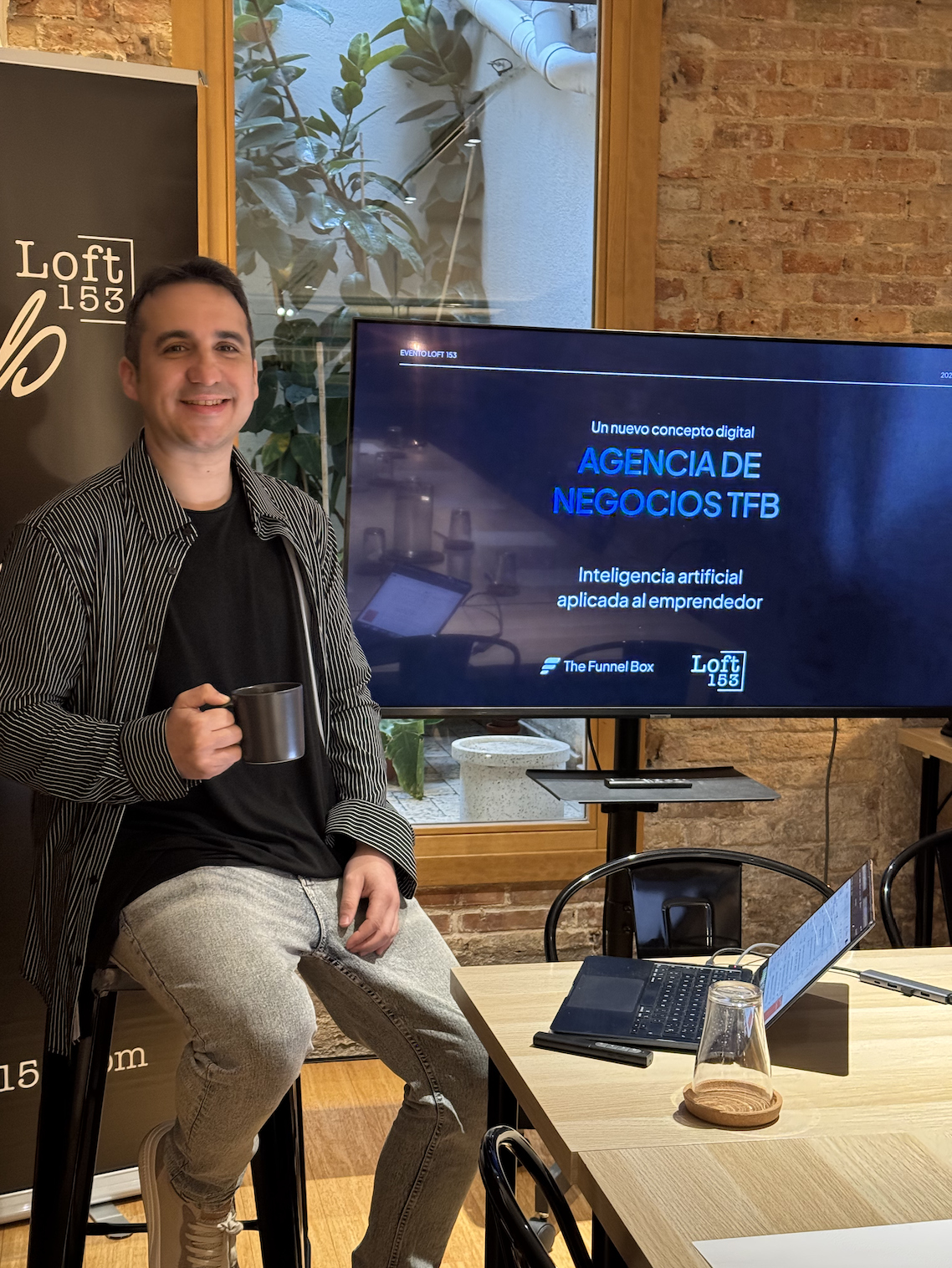
Written by
Gonzalo Castro
Founder of The Funnel Box · OpenAI Select Partner
Business and artificial intelligence consultant. I accompany companies from within to build growth systems that are sustained over time.
