AI Assistant for Reservations via WhatsApp: A Real Case
10 may 2026
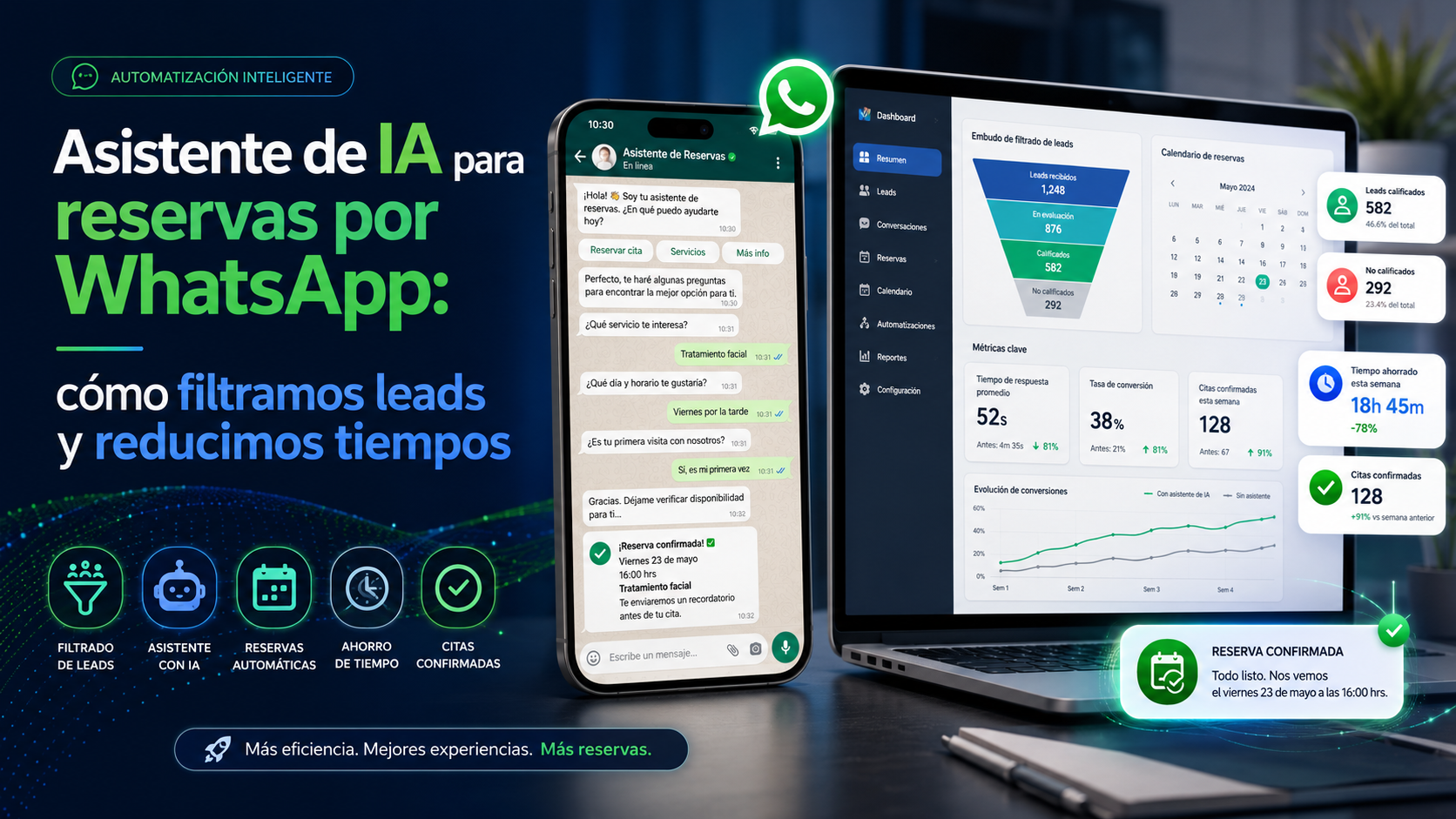
Creating an AI assistant for reservations via WhatsApp might seem like a simple automation at first glance. However, when designed well, it can become a strategic tool to enhance productivity, reduce response times, and separate qualified leads from contacts that are not yet ready to move forward.
At The Funnel Box, we work on these types of solutions from a clear premise: artificial intelligence should not be implemented as a trend, but to solve a specific business problem. In this case, the challenge was very specific: a client was receiving an increasing volume of high-level contacts, but the internal team was spending too much time managing initial conversations, answering repeated questions, and filtering requests that did not always end in an actual reservation.
The solution was not just to "put in a chatbot." It was to analyze the entire process, understand where time was being lost, define what the AI should do, and build an assistant connected to WhatsApp capable of organizing the first contact, qualifying leads, and facilitating reservation management.
What Happened: Too Much Time on Unqualified Contacts
The client already had demand. The problem was not only to generate more leads but to better manage those that came in.
The team received messages from interested people, but many conversations started from scratch:
• Basic questions about availability
• Repeated doubts about the service
• Requests without sufficient information
• Contacts that did not fit the desired profile
• Curious people, but not ready to book
• Conversations that required several exchanges before knowing if it was worth advancing
This generated a significant operational burden. The team had to respond quickly, maintain the quality of the interaction, and at the same time, detect which contacts had real potential. In practice, too much human time was being allocated to tasks that could be better structured.
That's where artificial intelligence consulting makes sense: it's not about replacing human judgment, but freeing the team from repetitive tasks so they can focus on more valuable conversations.
The Funnel Box
Need to automate your processes?
We implement CRM, commercial flows and automations that save time and deliver results.
How the Problem Was Detected
Before proposing a solution, we analyzed the process of capturing and managing contacts. The initial question was not "what tool do we use," but "where is efficiency being lost."
Upon reviewing the flow, several clear signals appeared:
• The first contact depended too much on the human team
• Many questions were repeated every day
• Not all leads had the same level of intent
• Information arrived disorganized
• The reservation required too many manual steps
• The team took time to know if the lead was truly qualified
The problem was not a lack of effort. It was a lack of a system that filtered, organized, and guided the initial conversation.
This type of diagnosis is key in our approach to business consulting: before automating, it's essential to understand which part of the model limits growth, productivity, or profitability.
What the Client Proposed
The client needed a practical solution but did not want to lose quality in service. This part was important. Poor automation can create friction, impersonal responses, or a poor user experience.
What they proposed was:
• Reducing the time spent on repetitive conversations
• Attending to first contact messages faster
• Better filtering of leads before passing them to the team
• Facilitating reservation management
• Maintaining a clear and professional experience
• Preventing unqualified contacts from saturating the process
In other words, they were not just looking to "respond faster." They wanted to improve the commercial system from the start of the funnel.
Therefore, the solution had to connect
Written by
Gonzalo Castro
Founder of The Funnel Box · OpenAI Select Partner
Business and artificial intelligence consultant. I accompany companies from within to build growth systems that are sustained over time.
