ChatGPT Ads, OpenAI and the future of digital visibility: why companies must prepare now
Jun 17, 2026

The end of a rule that lasted two decades
For more than two decades, digital strategy had a simple rule: if you wanted to be found, you had to show up on Google. Today that rule is starting to change.
Not because Google has disappeared —it's still the main gateway to the internet for billions of people— but because, for the first time, we're seeing a real shift in how people research, compare and decide. More and more of them ask ChatGPT, Gemini, Claude or Perplexity directly before ever visiting a website. And that changes the rules of the game.
OpenAI is no longer "testing": ads in ChatGPT are already real
Let's be precise, because this moved fast. OpenAI announced advertising in ChatGPT on January 16, 2026 and began rolling it out on February 9, 2026, for now in the United States, to logged-in users over 18 on the Free and the new ChatGPT Go plan (8 USD/month). Plus, Pro, Business, Enterprise and Edu remain ad-free.
What do they look like? They appear as clearly labeled "Sponsored" blocks, in a subtle box below the response, and —according to OpenAI— they don't alter the content of the model's answer. Targeting isn't keyword-based like Google Ads: it's contextual, based on the conversation topic, history and previous ad interactions.
The rollout is phased, expanding gradually to more markets throughout 2026. To many advertisers this looks like "just another channel". It's actually something much bigger: the birth of a new layer of the internet where conversation slowly replaces traditional search.
The most important change is not the ads
Most companies are asking one question: "when will I be able to advertise on ChatGPT?". The right question is another: what happens if my potential customers stop searching on Google and start asking an AI directly?
Because it's already happening. People used to search for "best software for clinics", "best CRM for real estate" or "marketing agency for ecommerce". Now they ask the AI: "which CRM would you recommend for a real-estate company?", "what's the best agency to scale an ecommerce?", "what tools do the most advanced companies in my sector use?".
The difference looks minimal. It isn't. In the first case you compete for a click. In the second you compete to be recommended. And in a recommendation there aren't ten results: usually there are one, two or three names.
The numbers that explain why this matters

This isn't a niche fad, it's a change of scale. ChatGPT passed 1 billion monthly active users by mid-2026, with around 900 million weekly active users and some 2.5 billion prompts per day.
The market is also diversifying: ChatGPT's share among AI apps went from roughly 69% in early 2025 to around 45% in early 2026 —not because it's losing users, but because Gemini, Claude, Perplexity and others keep adding them. Talking to an AI stopped being "using an app" and became a behavior.
The traffic AI sends to websites grew more than 500% year-over-year through mid-2025, and ChatGPT accounts for nearly 87% of that AI referral traffic. And here's what matters most for a business: according to HubSpot's State of Marketing 2026 report, 58% of marketers say visitors arriving from AI tools convert better than traditional organic traffic. There aren't just more people asking AI: when they arrive recommended, they buy more.
From searching to asking: how the customer journey changes
This doesn't mean Google is dying. It means the user journey is changing. The classic model —query, list of links, click— is evolving into another: question, generated answer, recommendation, action.
And Google itself admits it: AI Overviews and Gemini already weave AI-generated answers above the classic results. The world's largest search engine is acknowledging, with its own product, that the future of search is conversational.
The Funnel Box
Need a growth strategy?
Business consulting focused on real and sustained results.
From SEO to AEO (and GEO): the new battle for visibility
For years we worked to rank pages in search engines. Now a new discipline appears: AEO (Answer Engine Optimization), optimization for answer engines, also called GEO (Generative Engine Optimization).
Its goal is no longer just to rank a URL. It's to increase the odds that an AI uses your brand as a reference when it generates an answer. The early signals are clear: for example, 83% of the citations AI makes on commercial queries come from pages updated in the last twelve months. AI rewards fresh, deep content with real authority, not the page stuffed with keywords. We're at an early stage, yes, but the direction isn't really up for debate.
What should companies do now?
We don't think you should abandon Google, nor move your whole budget to ChatGPT. We think you should start preparing for an environment where visibility no longer depends only on traditional rankings. Four concrete actions:
1. Build real authority. AIs lean on sources with reputation, consistent presence and clear signals of specialization. Authority isn't improvised: it's built over time.
2. Create deep, up-to-date content. AI answers draw on structured, contextual information, not pages designed only for a keyword. And, as we saw, recent content carries weight.
3. Work on the brand. When an AI recommends a company, there's almost always a combination of authority, relevance and prior recognition of that brand in its category.
4. Measure your presence in AI. It will matter more and more to know what happens when someone asks about your category, your service or your problem inside ChatGPT, Gemini, Claude or Perplexity. If they don't name you, there's work to do.
What we are doing at The Funnel Box
We believe this is one of the most important shifts in digital marketing since Google Ads appeared. That's why we've already applied to take part in the early-access programs for advertising inside ChatGPT, and we follow every new format OpenAI launches closely.
But our focus isn't only on ads. We want to understand how brands' visibility will evolve inside the AI systems that millions of people use every day to research, compare and decide. That's the layer we're learning to work on for our clients today, while most still look the other way.
Because the big question is no longer only how to show up first on Google. The big question is: what happens when an AI has to recommend a company in your sector and your brand isn't in the conversation? The companies that start working on that visibility today will have an advantage that's very hard to recover tomorrow.
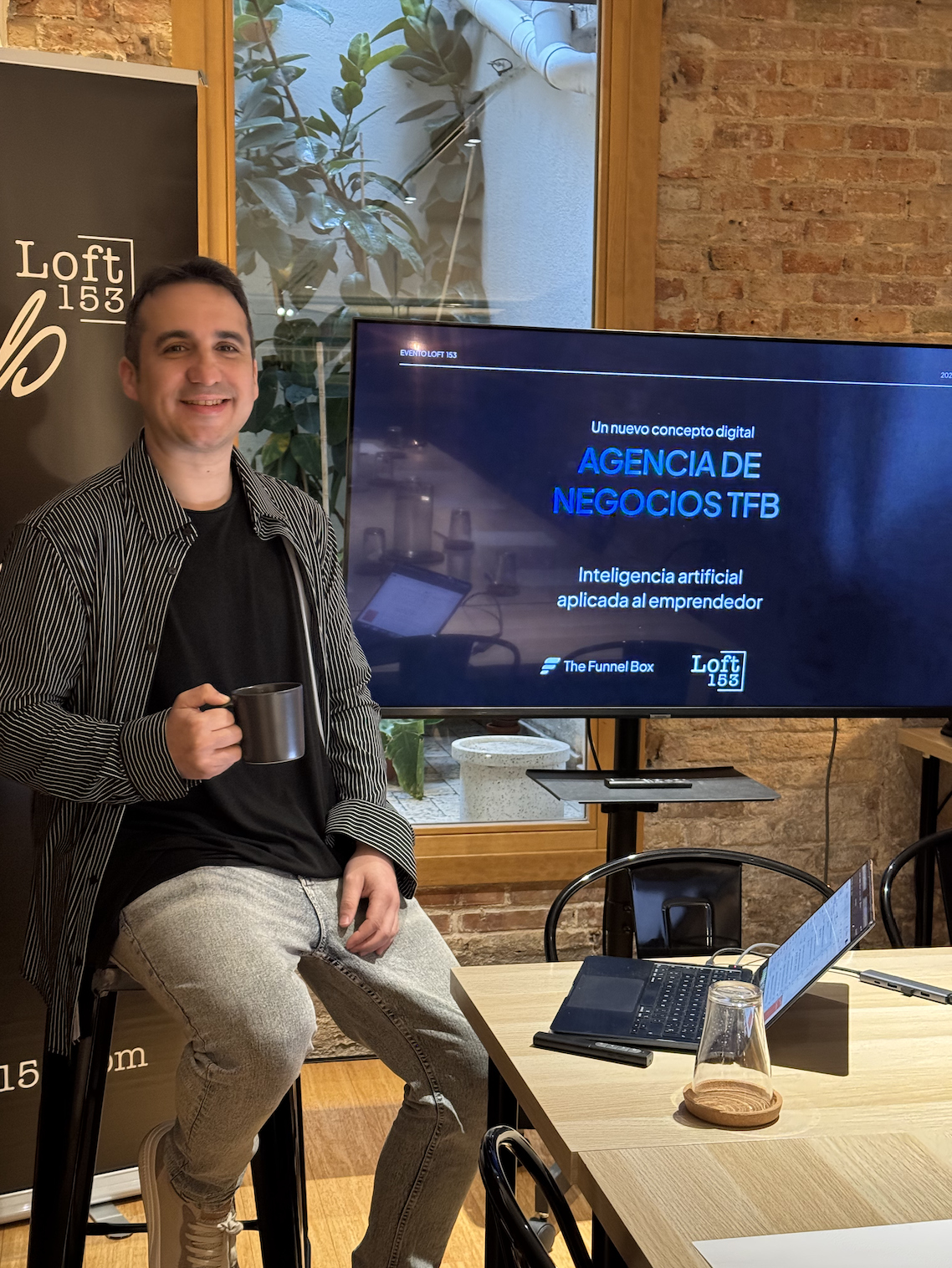
Written by
Gonzalo Castro
Founder of The Funnel Box · OpenAI Select Partner
Business and artificial intelligence consultant. I accompany companies from within to build growth systems that are sustained over time.
