What Does a Business Consultant Actually Do?
19 sept 2025

What does a business consultant actually do?
A few years ago a small shop that digitized old VHS tapes and Super 8 reels came to us with one request: run some ads so more people find us. That was the entire brief. More ads.
We spent a week looking at the business and told them the ads were not the problem. They had no real brand, a website that barely worked, no way to know where a lead came from, and a manual process that would collapse under ten extra orders, let alone a hundred. Spending on ads would have set fire to the money. So we rebuilt the whole thing: the brand, the site, the CRM, the internal processes, the automations, even the logistics. That shop, B&W Foto Video, went from a local counter to a company shipping across Spain, and its sales grew by 1,700%. It is one of our success stories.
So what does a business consultant actually do? In one line: a business consultant studies how your company really works, from your value proposition down to your processes and your numbers, finds what is truly blocking growth, and builds the system to fix it, ideally next to you instead of inside a slide deck. The good ones do not just give advice. They get into the machine with you.
The real work: from the surface to the deep
When most people picture a consultant, they picture advice. Someone senior shows up, listens for an hour, and leaves you a document with recommendations. That version exists, and it rarely changes anything, because the document sits in a drawer and the business keeps running the way it always did.
The work that moves a company is deeper. It starts at the surface, the marketing and the sales, because that is where the pain is loudest. But the reason the pain is there usually lives further down: a value proposition nobody can explain in one sentence, prices set by copying competitors, a sales process that depends on one person remembering to follow up, operations held together by a spreadsheet and goodwill, and numbers nobody looks at until the end of the year.
A business consultant goes through those layers one by one. What are you actually selling, and to whom. Why do people buy, and why do they leave. Where does the money come in, and where does it quietly leak out. Which tasks eat your team's week and could run on their own. Only after that does a plan make sense, because now it fixes causes instead of symptoms.
The way I work is simple to describe and hard to fake. First I get inside the business and learn how it truly runs, who does what, where value is created and where it is lost. Then we sit down and argue about it, because the owner knows things about the company that no audit will surface. Then we change one thing at a time and watch what happens. The first months are where it is won or lost, not the kickoff meeting.
Business consultant vs coach vs agency vs advisor
These words get used as if they mean the same thing. They do not, and hiring the wrong one is a common way to waste a year.
Business consultant. Diagnoses the whole business, designs the plan, and often helps execute it. Best when you need direction and hands to change how the company actually works.
Business coach. Works on you, the owner: your mindset, habits and accountability. Best when you already know what to do but struggle to do it consistently.
Agency. Executes one channel you already chose, like ads, SEO or design. Best when you have the strategy and need a specific job done well.
Advisor. Gives high level input every so often, without executing. Best when you want senior perspective a few times a quarter.
In practice the lines blur, and the best fit for most small and mid-sized companies is a consultant who also executes. A plan you cannot implement is worth about as much as no plan. That is why we do both: we design the strategy and then build and run the system with your team, instead of handing you a document and wishing you luck.
When do you actually need a business consultant?
You probably do not need one to write a mission statement. You do need one when the same problems keep coming back no matter how hard everyone works. A few honest signals:
- Revenue is flat while effort keeps rising. You are working more and selling the same. That gap is almost always a system problem, not an effort problem.
- The business cannot run without you. If every decision, sale and fire needs the owner, you do not have a company yet, you have a very demanding job.
- You cannot say which channel brings the money. When nobody can point to where customers actually come from, budget gets spread by guesswork.
- You keep hiring to patch a broken process. Adding people to a process that leaks just builds a bigger, more expensive leak.
- Decisions are made on gut, not on numbers. Instinct is useful, but when it is the only input, you are flying blind.
The Funnel Box
Need a growth strategy?
Business consulting focused on real and sustained results.
What does a business consultant cost?
The honest answer is that there is no honest fixed price, and anyone who quotes you one before understanding your business is selling a package, not a solution.
A one-time strategic diagnosis and a full rebuild that includes execution over several months are not the same job, so they cannot cost the same. What you should pay for is the outcome and the system, not the hours of talking. At The Funnel Box the price is set by what the business actually needs, because the scope is different every time, and pretending otherwise would mean either overcharging the simple cases or underdelivering on the hard ones.
One thing worth saying plainly: cheap advice that changes nothing is the most expensive thing you can buy, because you pay for it twice, once in fees and again in the year you lost.
What a business consultant does for a small business
A small business does not need a hundred-slide deck from a firm that has never met a payroll. It needs someone who understands that every euro and every hour counts, and who is willing to roll up their sleeves.
For a small company, a good small business consultant does the unglamorous work: sharpening the offer, fixing the sales follow-up so leads stop falling through the cracks, putting in a CRM the team will actually use, and automating the repetitive tasks that quietly eat the week. Nothing exotic. Just the system a growing business needs and rarely has time to build.
That is the whole idea behind our business consulting services: we go in, find the real bottleneck, and stay until the system works, instead of leaving you with homework.
Frequently asked questions
What does a business consultant do day to day? It depends on the stage. Early on, mostly listening and analyzing: interviews, reading the numbers, mapping how work really flows. Later, designing and building: the strategy, the processes, the CRM, the automations, and sitting with the team while they adopt them.
What is the difference between a business consultant and a business coach? A coach works on you, the owner, your habits and decisions. A consultant works on the business itself, its model, processes and numbers. You can need both, but they are not interchangeable.
How much does a business consultant cost? It is priced by scope, because a diagnosis and a full rebuild-and-execute engagement are different jobs. Be suspicious of a fixed price given before anyone has understood your business.
Do small businesses really need a consultant? Not always, but a small business is often where a consultant helps most, because a few structural fixes to the offer, the sales process and operations can change the trajectory of a company that is otherwise stuck working harder for the same result.
What should a good business consultant deliver? Not a report you file and forget. A clear diagnosis, a plan you can actually implement, and ideally the execution that turns it into a working system.
The short version
A business consultant is not the person who tells you what you already suspected in nicer words. It is the person who goes into your business, finds the real bottleneck, and stays until the system runs without heroics. If nobody in your company is doing that work, that missing role is usually where your ceiling is.
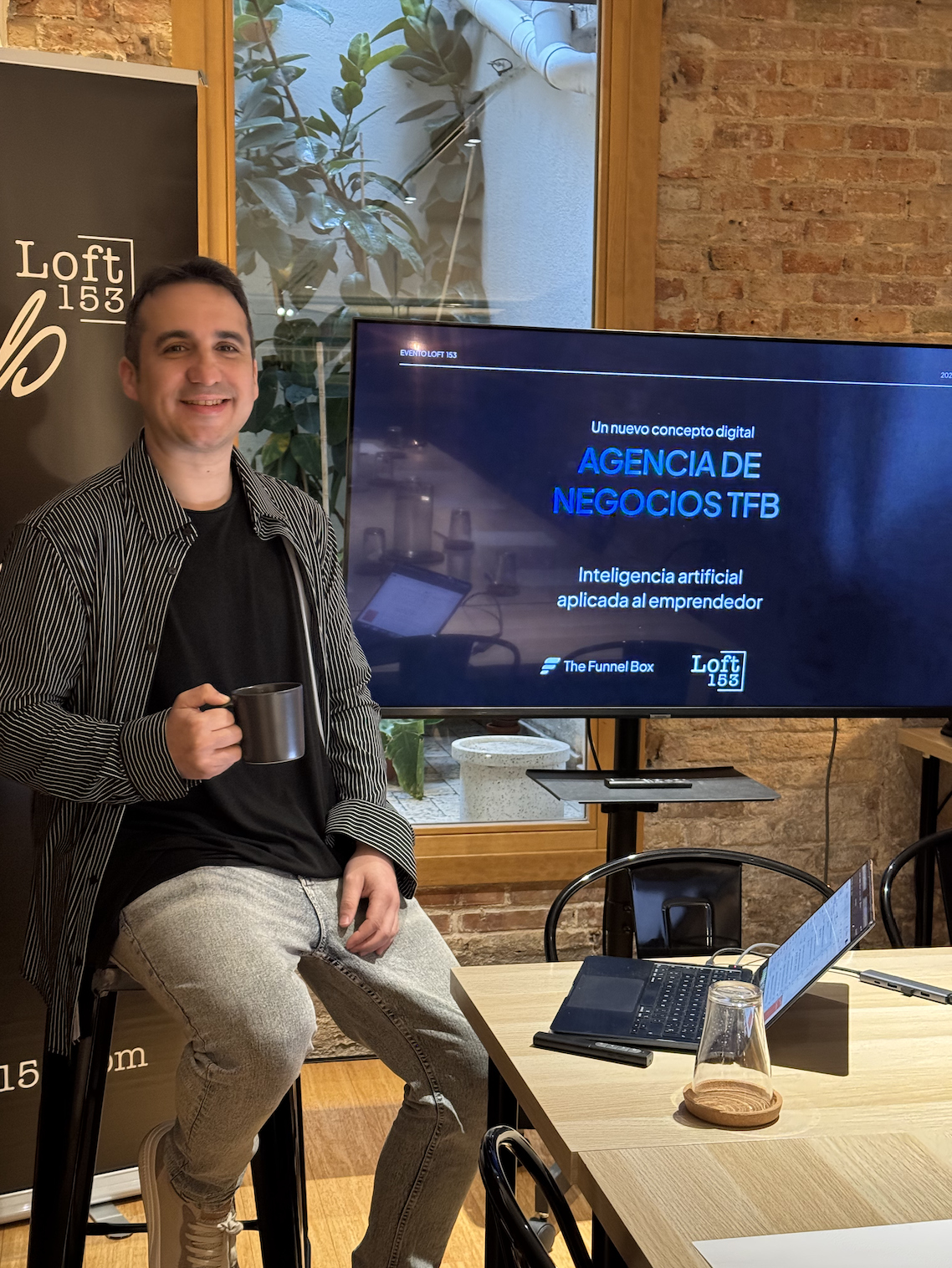
Written by
Gonzalo Castro
Founder of The Funnel Box · OpenAI Select Partner
Business and artificial intelligence consultant. I accompany companies from within to build growth systems that are sustained over time.
